Chinese cultural wisdom, explained clearly for modern life
AETERA is building a modern English gateway to Chinese cultural systems: Qi, Yin and Yang, Five Phases, Feng Shui, Bazi, and time wisdom.
Definitions first, with translation notes and practical examples.
Cultural source concepts are visible, not flattened into novelty labels.
No fear tactics, prediction certainty, or unsupported authority claims.
How to trust this knowledge base
AETERA is building for English-speaking readers who want Chinese cultural wisdom without superstition, fear marketing, or vague wellness language. Our public standards explain how we define terms, show translation limits, and keep claims bounded.
Four places to begin
These pages connect common reader questions to the deeper knowledge system: definition, calculator, home application, and Chinese time-pattern meaning.
What are the Five Elements in Chinese culture?
The direct answer page for Wood, Fire, Earth, Metal, and Water as Wu Xing / Five Phases.
What is my Chinese element?
A practical tool for understanding a year element, with Lunar New Year and cultural boundary notes.
What is Feng Shui?
The applied Feng Shui hub for home, bedroom, work, Qi, flow, and modern spatial ritual.
What is Bazi?
The bounded Four Pillars guide for symbolic time-pattern reading without fatalistic claims.
Start Here
This is the recommended reading order for users who are new to Chinese cultural wisdom.
Answers
Read short, citable answers to common questions before moving into deeper topic guides.
Glossary
Keep a short reference for Qi, Yin and Yang, Wu Xing, Feng Shui, Bazi, and the Five Phases.
Knowledge Graph
See concept relationships, familiar names, primary guides, and claim boundaries behind the knowledge base.
Qi
Start with vital rhythm: how life is felt through space, attention, recovery, and daily practice.
Yin and Yang
Learn balance as a changing relationship between rest and action, inwardness and expression.
Five Phases
Understand Wood, Fire, Earth, Metal, and Water as movement patterns, not static labels.
Five Elements
Begin with the familiar English name: Wood, Fire, Earth, Metal, and Water in Chinese culture.
Chinese Element Calculator
Answer the common question "what is my Chinese element?" with a bounded, educational year-element tool.
Wood, Fire, Earth, Metal, Water
Read each phase as a distinct cultural pattern: growth, expression, support, refinement, and restoration.
Feng Shui
Apply cultural spatial wisdom to home, work, recovery, material, light, and flow.
Chinese Time Wisdom
Understand time as rhythm: cycles, seasons, stems, branches, solar terms, and timing awareness.
Stems and Branches
Learn the Ten Heavenly Stems and Twelve Earthly Branches behind Chinese cyclic time.
24 Solar Terms
Read the solar year through seasonal markers, agricultural memory, and modern rhythm.
Bazi
Read time-based pattern language without reducing it to prediction or fatalism.
Common Questions
Quick answers for readers who want to understand the editorial position behind this knowledge base.
What is the best place to start learning Chinese culture on AETERA?
Start with the Chinese Culture Knowledge Base, then read Qi, Yin and Yang, Five Phases, Feng Shui, and Bazi in that order. This gives users a foundation before practical applications.
Does AETERA treat Feng Shui and Bazi as fortune telling?
No. Feng Shui, Bazi, Qi, Yin and Yang, and the Five Phases are explained here as cultural pattern languages and practical self-awareness frameworks, not as guaranteed prediction or diagnosis.
What is the difference between Five Elements and Five Phases?
Five Elements is a common English phrase, but Five Phases better captures the original Wu Xing idea: Wood, Fire, Earth, Metal, and Water as dynamic patterns of movement and transformation.
Concept Map
AETERA organizes Chinese culture through definitions, spatial practice, time-based pattern reading, and modern application.
Foundational Ideas
Space and Feng Shui
Time and Pattern
Modern Application
Core Topic Guides
These foundation pages offer clear definitions, cultural context, and practical boundaries.
Qi
Qi, also spelled Chi, is often translated as vital energy or vital breath. Its meaning changes by context and can include breath, vitality, atmosphere, circulation, or movement quality. AETERA uses vital rhythm as a modern interpretive bridge for voluntary reflection, not as a standard translation or clinical claim.
Yin and Yang
Yin and Yang are complementary forces in Chinese culture. The familiar symbol is only the doorway: the deeper idea is relational balance, where rest and action, cool and warm, inward and outward, and receptive and expressive qualities shift over time.
Five Phases
Wu Xing is commonly translated as Five Elements; Five Phases emphasizes movement, relationship, and process. AETERA uses growth, expression, stabilization, refinement, and restoration as modern interpretive bridges, not as standard translations or classical wording.
Wood Element
In Wu Xing, Wood is not only a material. It names the movement quality of sprouting, extending, planning, adapting, and finding direction. It helps explain beginnings, growth, flexibility, and the need for clear pathways.
Fire Element
In Wu Xing, Fire describes the movement of rising brightness: warmth, expression, visibility, social energy, attention, and transformation. It is powerful when regulated and exhausting when overdone.
Earth Element
In Wu Xing, Earth describes grounding, nourishment, containment, care, stability, and the center that helps change become livable. It is not passivity; it is the support that lets life metabolize.
Metal Element
In Wu Xing, Metal describes contraction, refinement, clarity, standards, boundaries, and completion. It is the movement that cuts away excess so value, form, and truth can become clearer.
Water Element
In Wu Xing, Water describes depth, reserve, reflection, memory, rest, adaptability, and strategic movement. It is not weakness; it is the quiet intelligence of storing, listening, and renewing.
Feng Shui
Feng Shui is not one decorating checklist. It is a varied Chinese spatial tradition whose historical concerns include landscape and siting, burial and dwelling, orientation, form, and the movement and gathering of Qi. Later schools and methods differ, so this foundation guide names the shared concerns without treating one rule as universal.
Chinese Time Wisdom
Chinese time wisdom is not one single fortune-telling system. It is a broad cultural way of reading time through cycles, seasons, Yin and Yang, Five Phases, stems, branches, solar terms, and lived rhythm.
Stems and Branches
The Ten Heavenly Stems and Twelve Earthly Branches combine to form the 60-part cycle used in traditional Chinese calendars and later symbolic timing systems.
24 Solar Terms
The 24 Solar Terms divide the solar year into 24 seasonal markers. They name shifts in light, temperature, rain, growth, harvest, cold, and rest, and remain an important part of Chinese seasonal culture.
Bazi
Bazi, also called Four Pillars, uses birth year, month, day, and hour as a symbolic time structure. A useful modern reading begins with Chinese calendar literacy: Heavenly Stems, Earthly Branches, Yin-Yang, Five Phases, season, and context before any personal interpretation or chart reading.
Cultural translation without superstition
Chinese cultural frameworks are explained here as symbolic and practical pattern languages, not as medical, psychological, financial, or scientific diagnosis.
We avoid fear-based Feng Shui, fortune-telling certainty, and claims that one object or ritual guarantees wealth, love, protection, or success.
The editorial goal is cultural translation: clear definitions, translation notes, common misunderstandings, practical examples, and modern applications.
Continue Learning
Recent knowledge pages and practical guides from the AETERA journal.
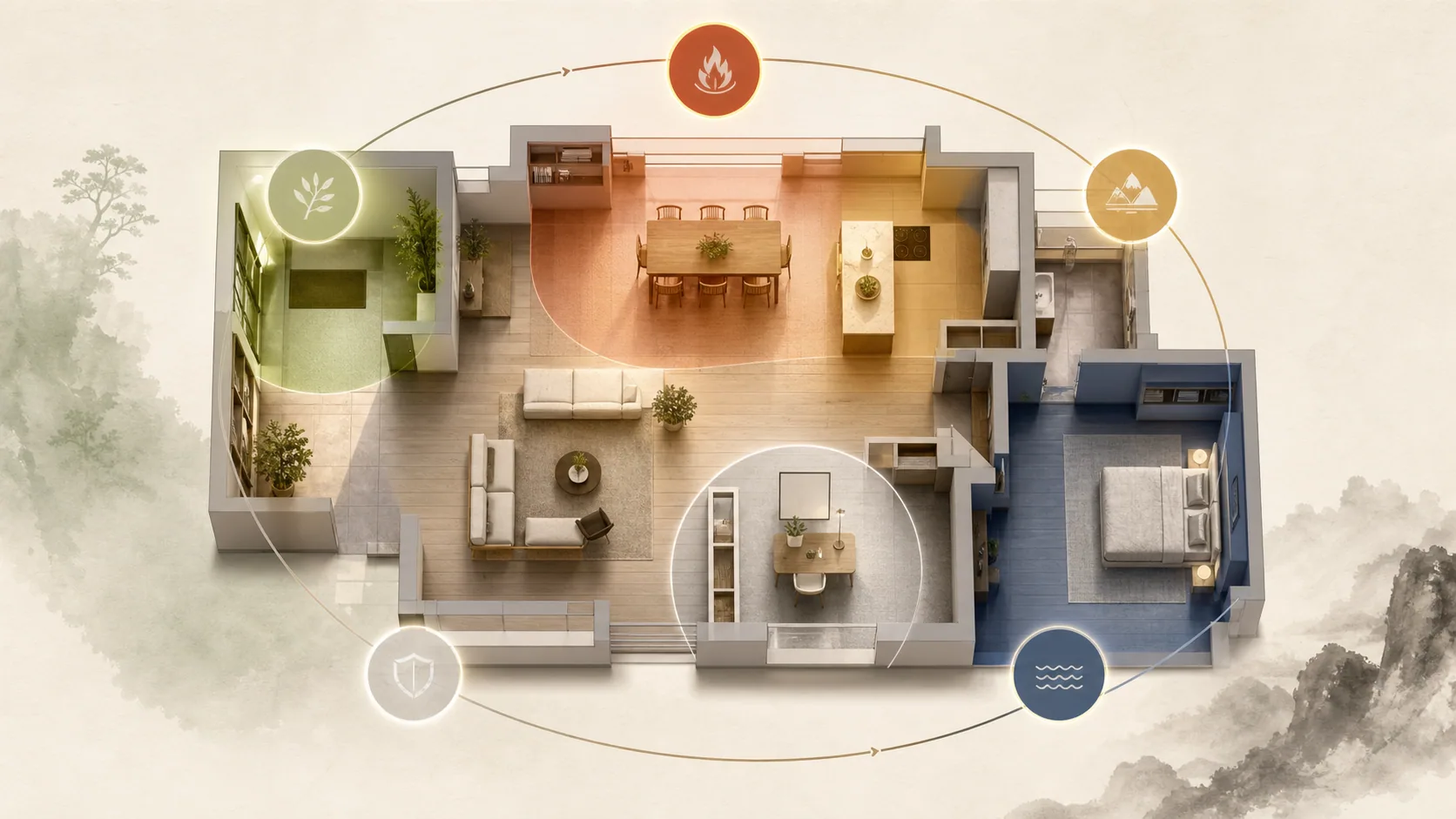
How to Use the Five Elements in Your Home Without Superstition
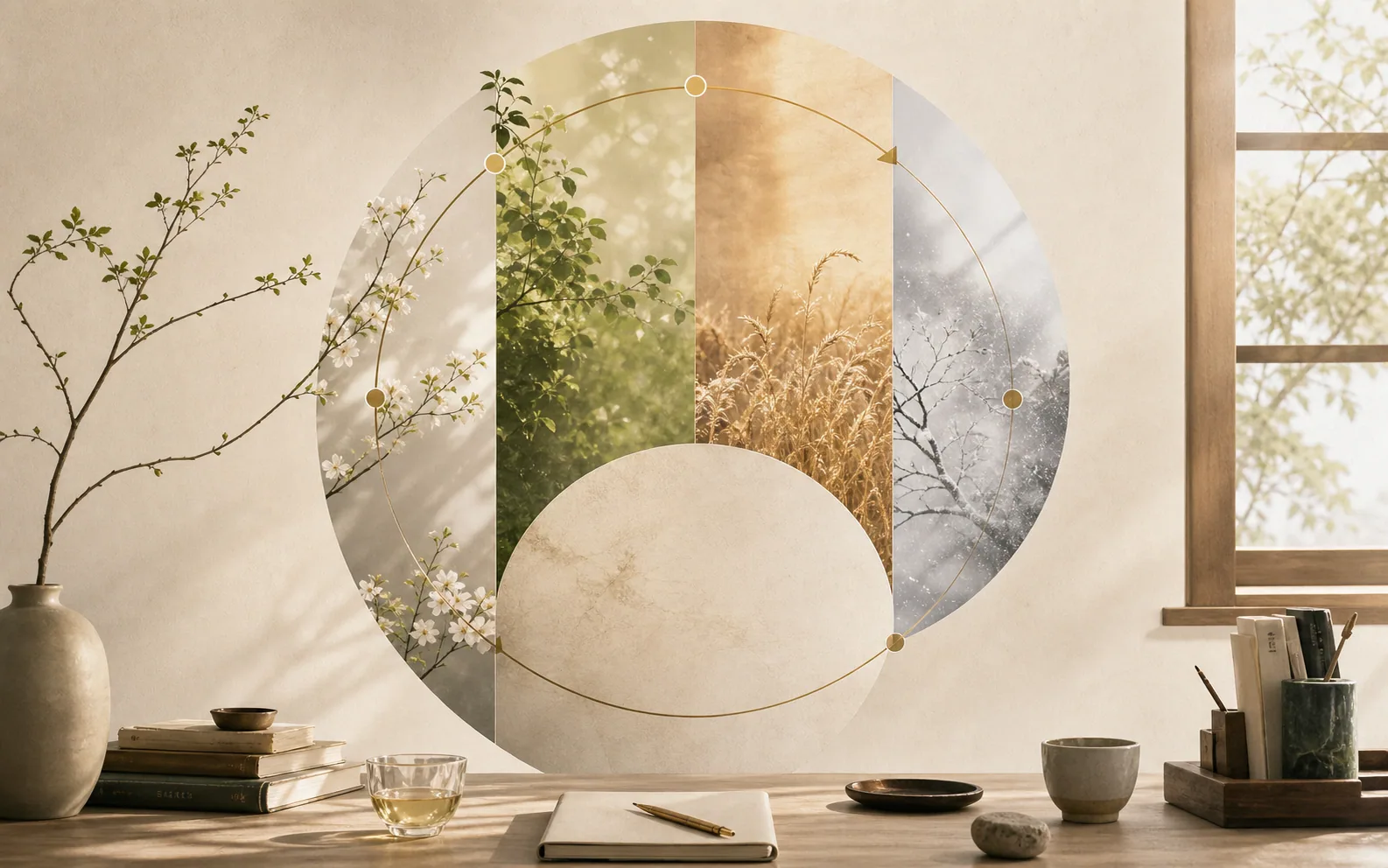
Chinese Time Wisdom for Modern Life Rhythm
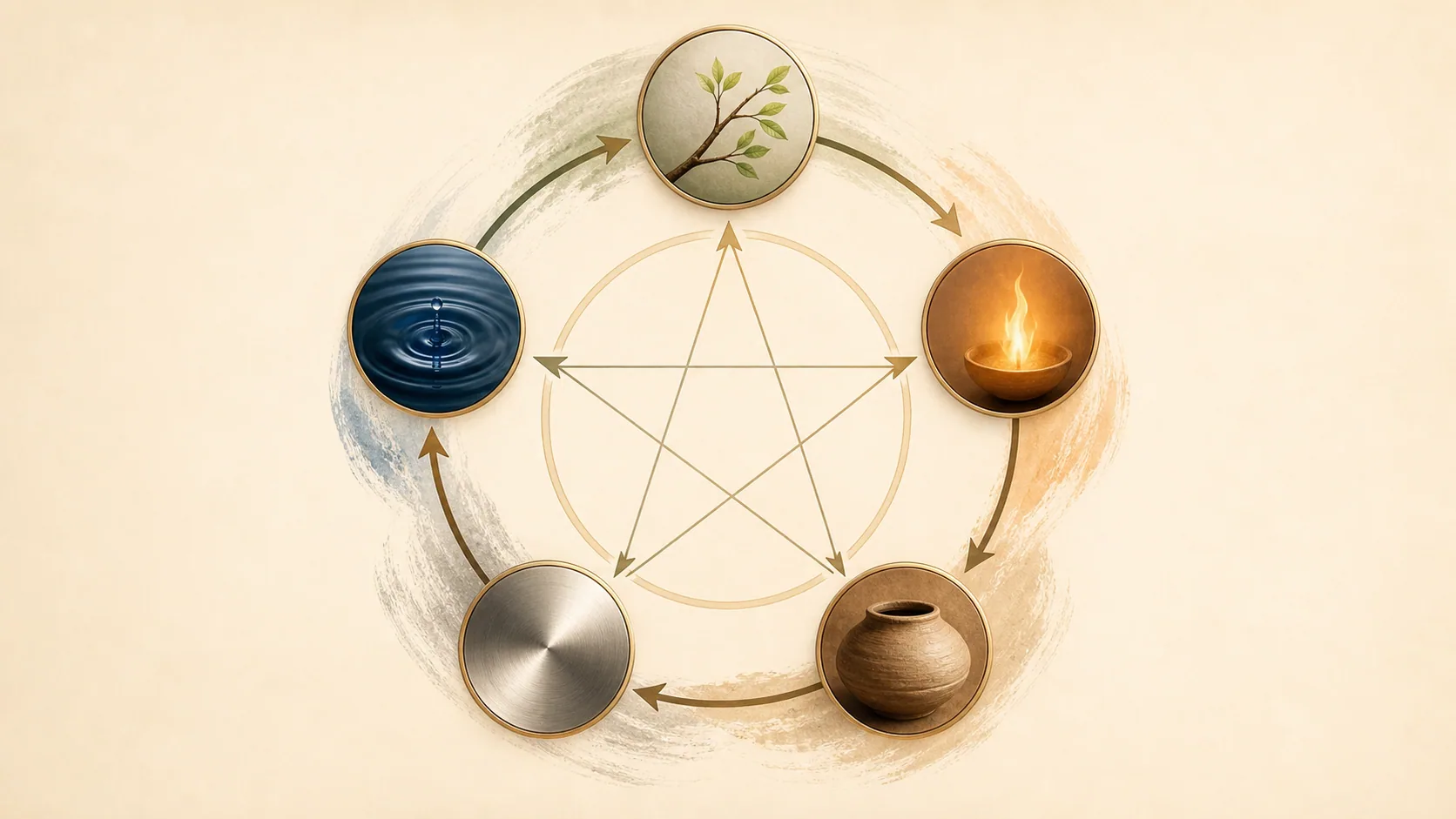
How Do the Five Elements Work? The Generating and Controlling Cycles Explained
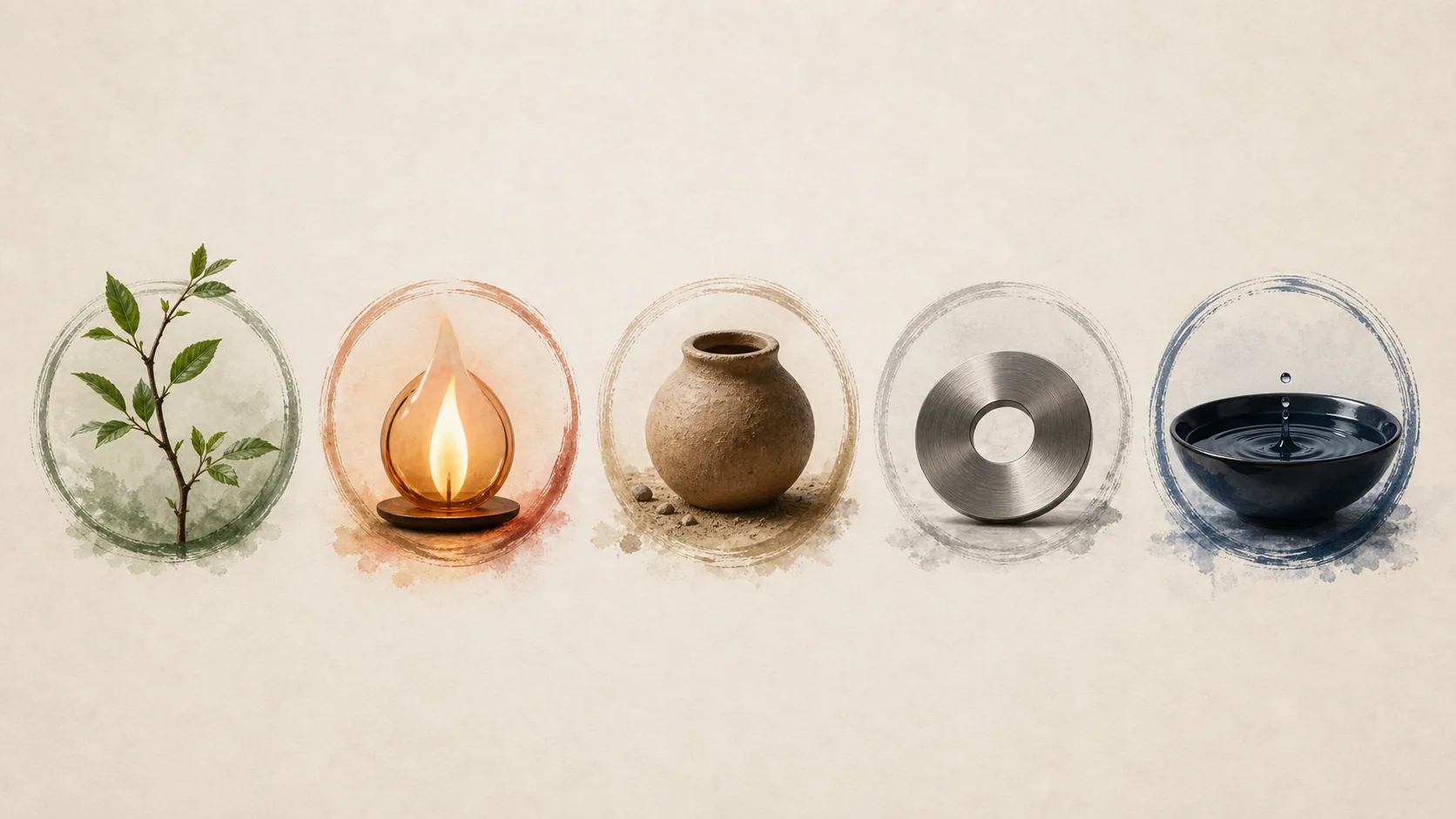
Five Phases in Context: History, Translation, Cycles, and Comparison
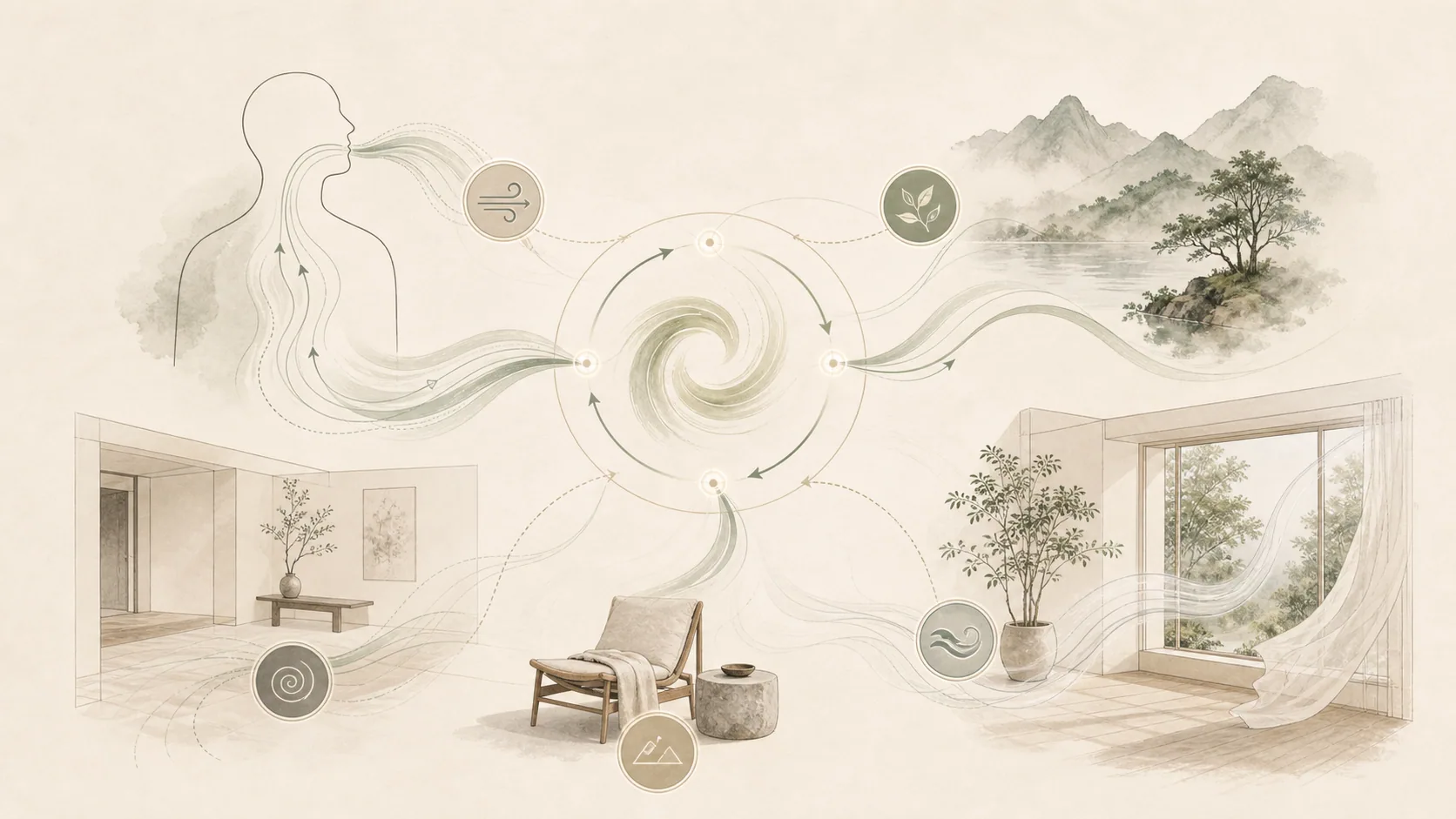
What Is Qi in Chinese Culture? A Practical Guide Without Pseudoscience
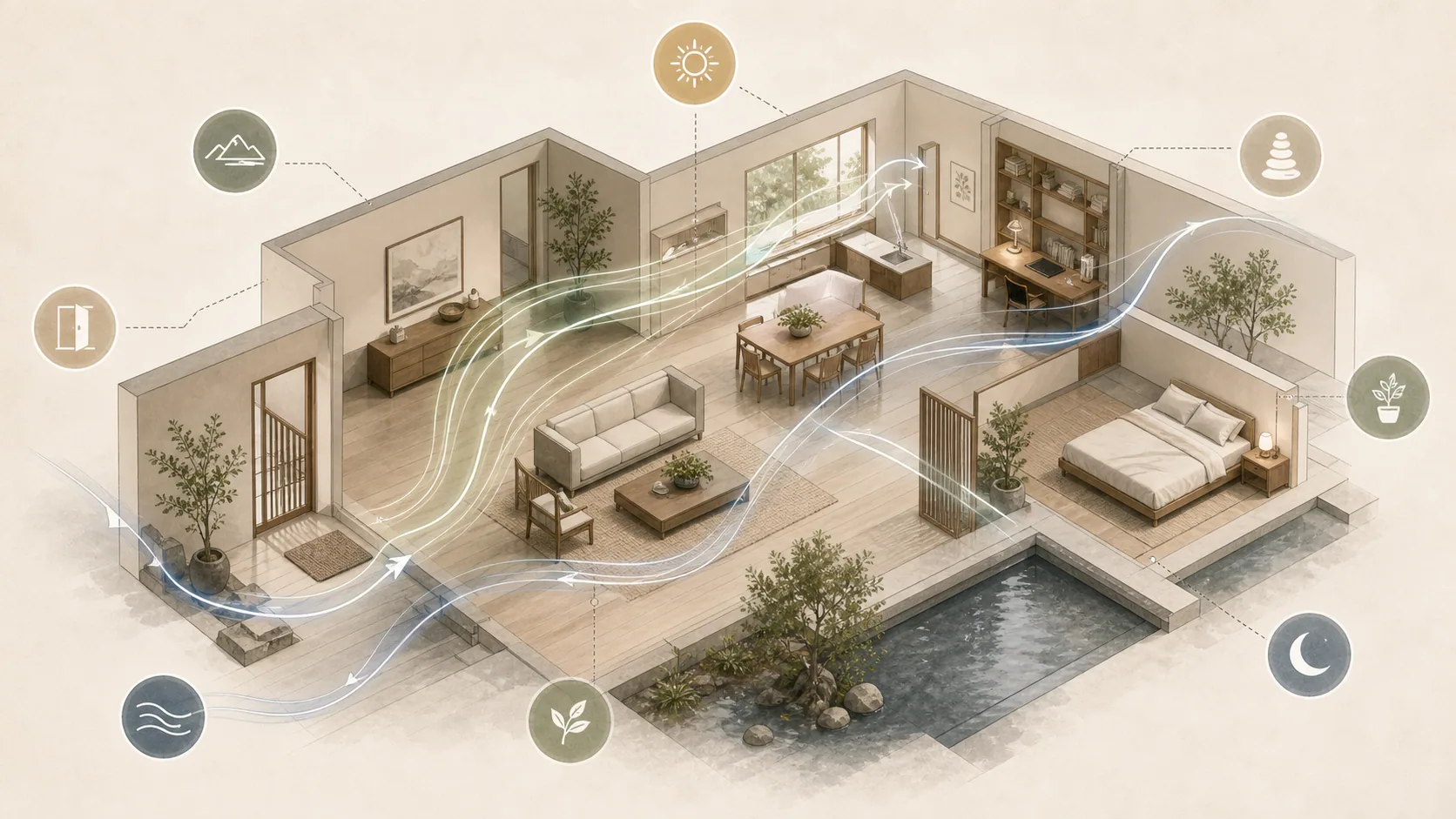
Chinese Feng Shui in Context: History, Schools, and Modern Misunderstandings
Use the Five Phases as a transparent reflection lens.
Choose a focus area, an observable friction, and a preferred practice mode. A fixed, visible rule selects one support lens and returns three actions. Answers remain editable. After the complete result, an optional deterministic local seven-day practice and optional follow-up are available.
Open Reflection Map