Apply Feng Shui to your home, one room condition at a time
Choose a bedroom, entryway, living room, or home office, then start with an observable condition such as pathway, support, placement, light, clutter, or room purpose. For definition, history, burial and dwelling context, and school variation, use the separate foundations guide.
Choose the room before the rule
This page is the modern application hub. Begin with the room's purpose and one visible condition you can change; do not treat a general tip as a universal school rule or a promise about luck, health, relationships, or success.
Read bed support, calm light, clear pathways, and separation from work cues.
Read arrival, circulation, seating relationship, and shared attention.
Read desk support, visual order, boundaries, and the end-of-work transition.
How rooms train attention, boundaries, and recovery.
How movement and atmosphere are read through light, flow, material, and daily use.
How small repeated actions turn cultural wisdom into lived practice.
Choose the Feng Shui question closest to real life
Credible Feng Shui begins with the condition you can observe: a threshold, room, work surface, sleep cue, or daily transition.
My home feels heavy or cluttered
Start with entry, pathway, light, clutter, and the first surface you see.
I want Feng Shui without superstition
Separate spatial wisdom from fear rules, lucky-object claims, and guaranteed outcomes.
I need better sleep and recovery
Use bedroom placement, light, work boundaries, and evening rhythm before adding symbols.
My workspace feels scattered
Read desk support, visual noise, boundaries, and work-to-rest transitions.
Feng Shui Foundations
Meaning, siting history, burial and dwelling, and varied school methods.
Room-by-Room Rituals
Entryway, bedroom, home office, and recovery spaces as daily ritual fields.
Period 9 Home Rhythm
How the Fire-phase climate changes visibility, screens, work, and rest.
Objects and Materials
How plants, stone, wood, brass, and ceramic can work as ritual anchors.
Start With These Guides
Use the deep reading for history and misunderstandings, then choose an application guide for the room or condition in front of you.
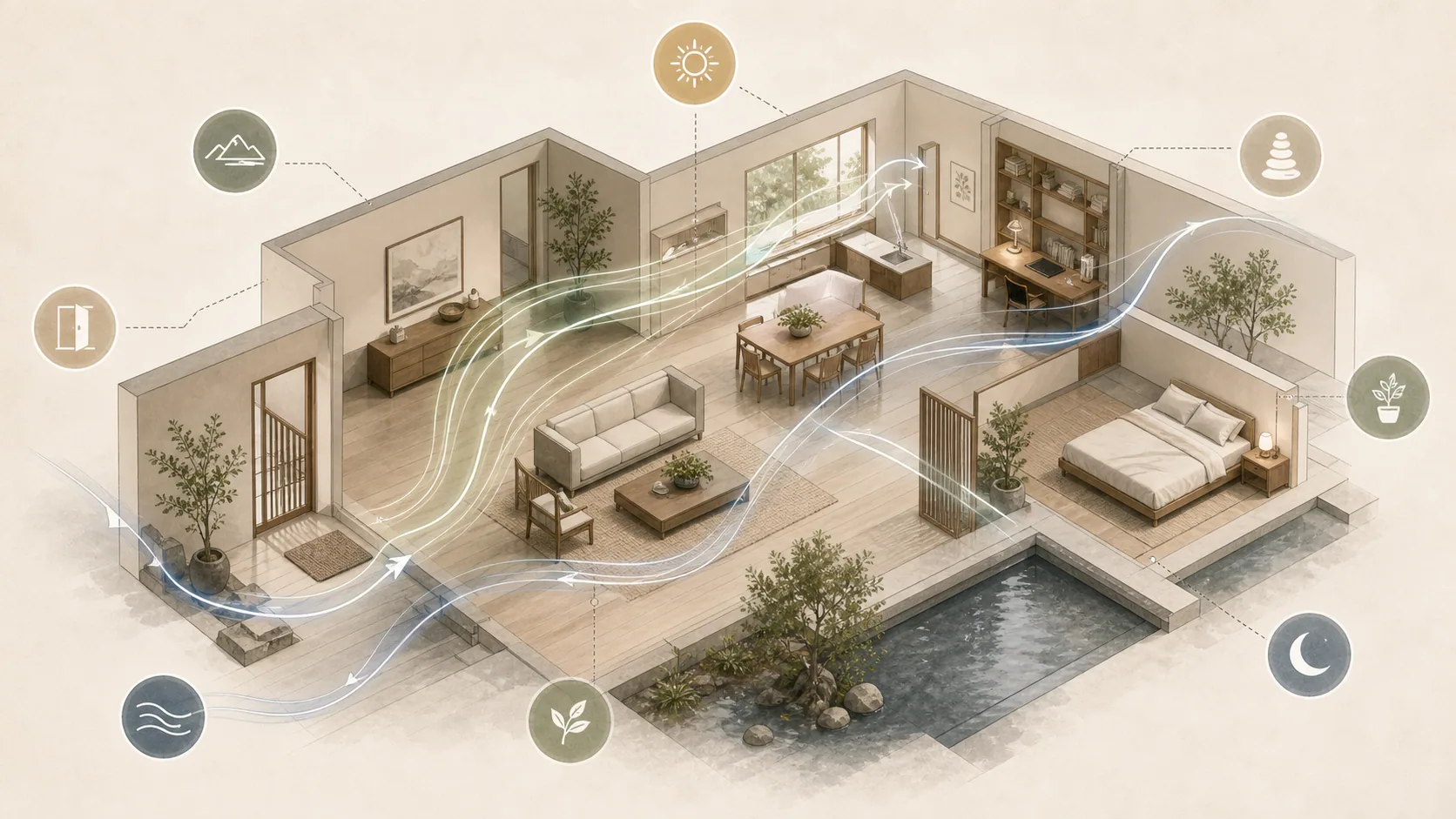
Chinese Feng Shui in Context: History, Schools, and Modern Misunderstandings
This deep reading examines Chinese Feng Shui across historical concerns, school variation, Qi, and modern application. Feng Shui includes landform and siting, b...
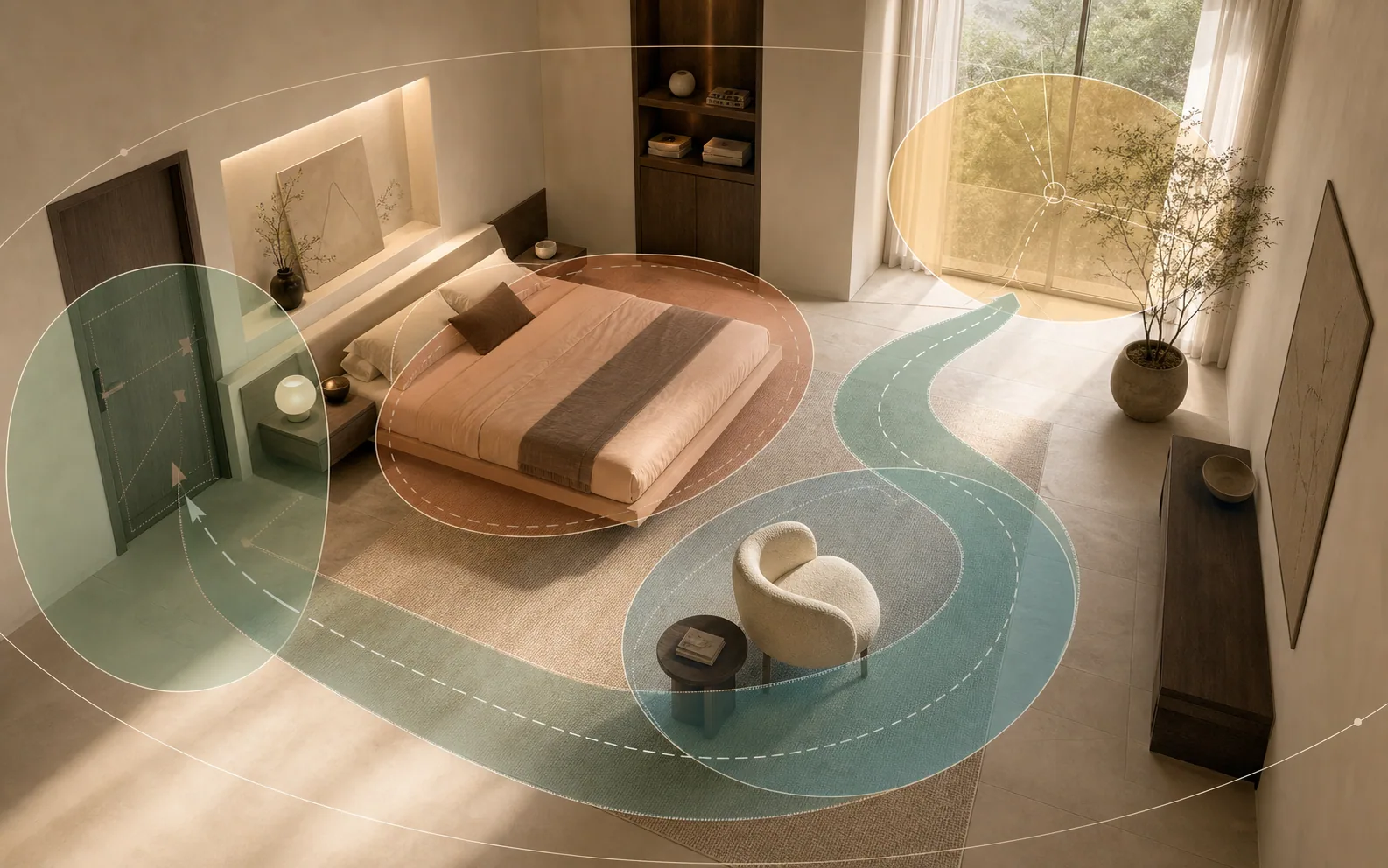
Is Feng Shui Superstition? A Modern Translation Without Fear or Lucky-Object Claims
Feng Shui can be presented superstitiously, especially when reduced to lucky objects, fear-based rules, or guaranteed outcomes. But Feng Shui is not only supers...

Feng Shui and Qi: How Space Shapes Vital Rhythm
Qi is one of the most important ideas in Feng Shui, but it is often flattened into vague "energy." A more careful English explanation is vital rhythm: the felt ...
Practical Feng Shui Rituals
Practical Feng Shui guides for the rooms, materials, and compact spaces that shape daily rhythm most directly.
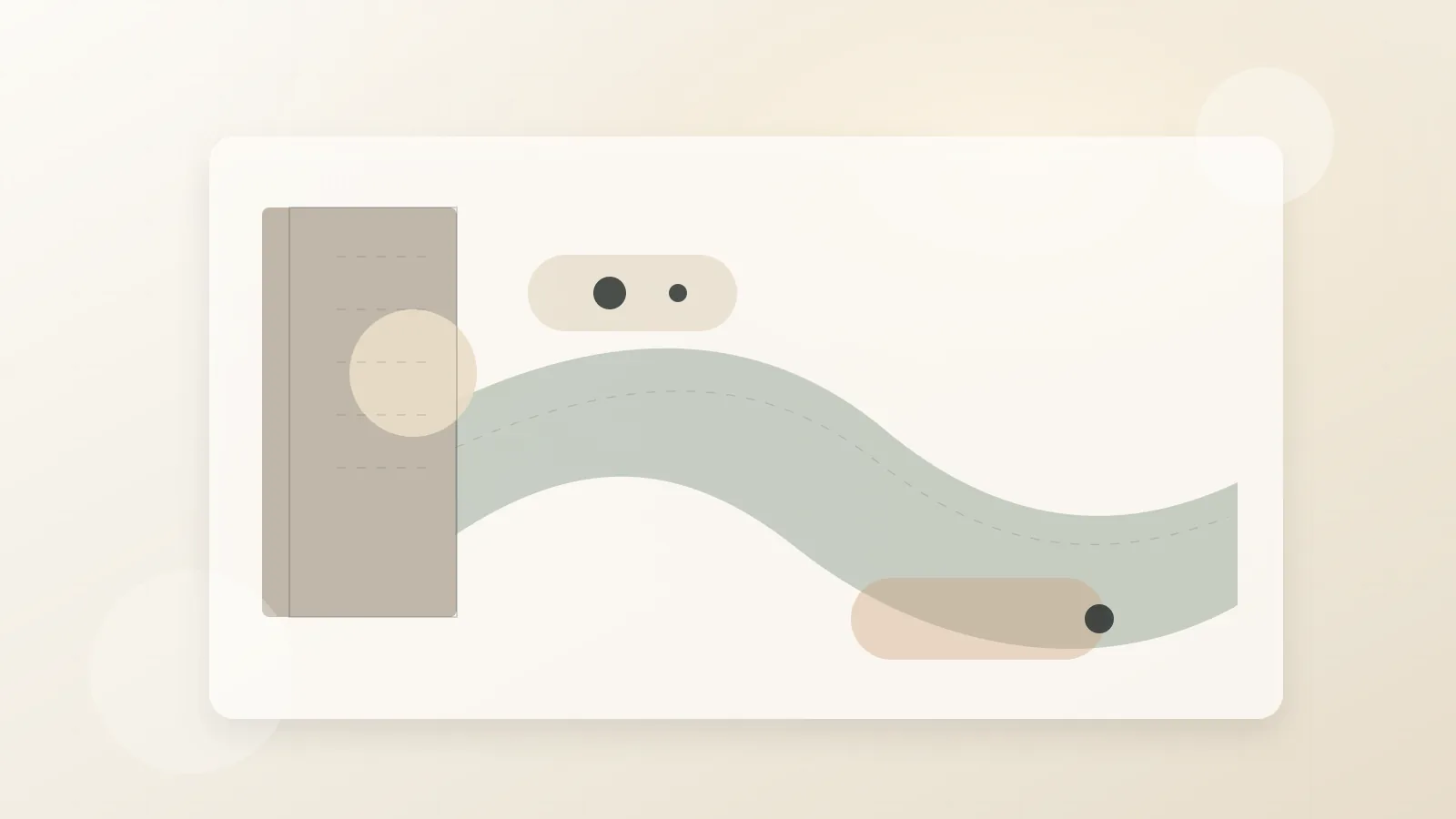
Entryway Feng Shui Without Lucky Charms: How to Shape the First Signal of Home
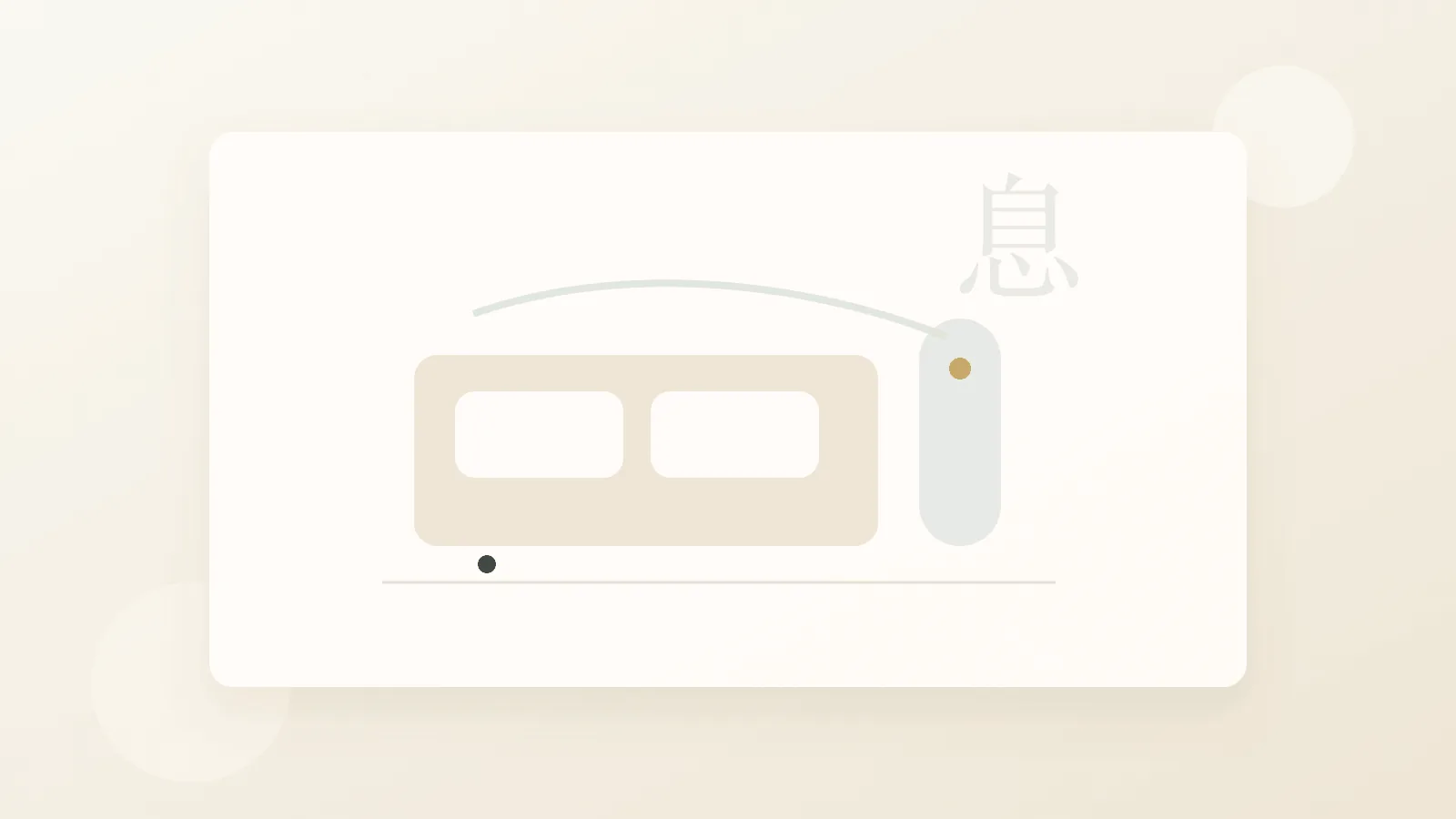
Bedroom Feng Shui for Recovery: How to Create a Quiet Sleep Ritual
Home Office Feng Shui for Focus: Desk Placement, Boundaries, and Work Rhythm
Small Apartment Feng Shui for Flow, Boundaries, and Recovery
A Complete Feng Shui Room Audit Without Superstition
Feng Shui Plants for Wood Qi: Growth, Care, and Living Rhythm
Period 9 Feng Shui in 2026: How the Fire Cycle Changes Work, Home, and Focus
Spatial Resonance: A Period 9 Feng Shui Audit for Home, Work, and Recovery

Recovery Calibration: Light, Screens, and Evening Rhythm in a Fire-Heavy Year
Feng Shui answers for practical searchers
These answers keep Feng Shui culturally rooted while avoiding fear rules, miracle claims, and lucky-object shortcuts.
Where should I start applying Feng Shui at home?
Choose one room and one observable condition: entry pathway, bed support, desk position, lighting, clutter, or the first surface that catches daily mess. Read the separate foundations guide first if you need the history and definition.
How do I use Feng Shui in a bedroom?
Begin with bed support, calm lighting, clear pathways, fewer work cues, and an evening downshift. Bedroom Feng Shui should support recovery, not fear-based rules.
Is Feng Shui superstition?
Feng Shui can be sold superstitiously, but it can also be explained as cultural spatial wisdom: entry, flow, support, light, room purpose, and daily rhythm.
What should I fix first in Feng Shui?
Start with one observable condition: the entryway, bed position, desk support, cluttered pathway, lighting, or the first surface that catches daily mess.
Reflect before changing the room.
Select a focus area, an observable friction, and a preferred practice mode. The Reflection Map applies one fixed, visible support-lens rule and returns three practical actions. You can edit the selections. After the complete result, an optional deterministic local seven-day practice and optional follow-up are available. It does not read birth data, measure a room, calculate Bazi, or score an imbalance.
Open Reflection Map