Direct Answer
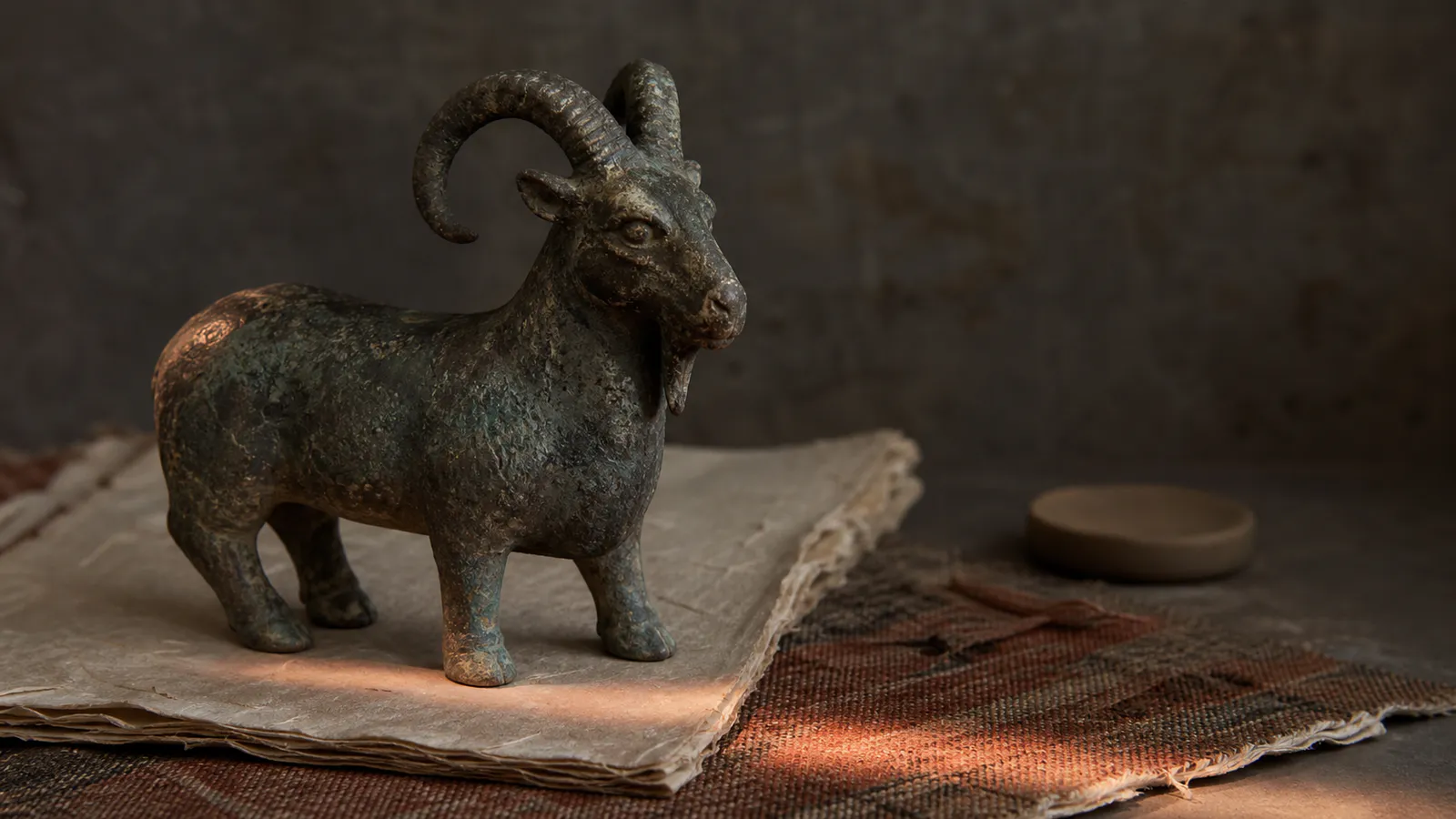
Under the Chinese-calendar convention used by official conversion tables, the 2027 Year of the Goat begins on February 6, 2027, Lunar New Year's Day, and ends on January 25, 2028. Its full stem-branch name is 丁未 (Dīng-Wèi). Ding is associated with Yin Fire, while Wei corresponds to 羊 (yáng, sheep/goat). "Fire Goat," "Fire Sheep," and "Fire Ram" are therefore English variants for the same traditional year. People born in January 2027 or before February 6 remain in the preceding Bing-Wu Fire Horse year under that convention.
2027 Dates at a Glance
- February 4, 2027, 01:46 UTC: Spring Commences, or 立春 (Lìchūn); in North American standard time, this is February 3 at 5:46 p.m. PST or 8:46 p.m. EST
- February 6, 2027: Lunar New Year's Day and the beginning of Ding-Wei under the conversion-table convention
- January 25, 2028: final day of the Ding-Wei lunar year
- January 26, 2028: first day of the Wu-Shen Monkey year
The Hong Kong Observatory's official 2027 conversion table labels the year "Ding-wei year of the Goat." The GovHK 2027 general-holiday notice confirms February 6 as Lunar New Year's Day. The Observatory's 2028 conversion table places the first day of the next lunar year on January 26. Japan's National Astronomical Observatory 2027 solar-term table gives Lichun as February 4 at 10:46 Japan Standard Time, equivalent to 01:46 UTC.
The February 6 boundary is the clearest answer for public calendars, family celebrations, school programs, museum events, and a basic zodiac lookup. The Hong Kong Observatory notes that some 八字 (Bāzì) and fortune-telling traditions instead change the year pillar at Lichun. An early-February result should therefore state its boundary method and time zone.
Why the Full Name Is Ding-Wei
The animal zodiac is the most visible part of a larger timekeeping system. Chinese years can be named through 干支 (gānzhī), the pairing of ten Heavenly Stems (天干, tiāngān) with twelve Earthly Branches (地支, dìzhī). Because ten and twelve cycle together, the same pair returns after 60 combinations.
The Hong Kong Observatory's stem-branch table lists Ding-Wei as the 56th pair in that sexagenary cycle. The two parts do different work:
- 丁 (Dīng): the fourth Heavenly Stem; in the Five Phases correspondence, it is Yin Fire
- 未 (Wèi): the eighth Earthly Branch; in the animal cycle, it is paired with 羊 (yáng, sheep/goat)
The Observatory's 12-year animal-cycle guide explains that the animals correspond to Earthly Branches. The animal label comes from Wei's correspondence with 羊, while the Fire label comes through the stem. They are separate parts of the year name.
This is why "2027 is a Goat year" is correct but incomplete. Years carrying the same animal branch return every 12 years; Ding-Wei returns every 60. The last Ding-Wei year was 1967, while 2015 carried the same animal branch with a different Heavenly Stem and phase association.
For an introduction to this larger grammar, read Chinese Time Wisdom and Five Elements in Chinese Culture.
Why Ding Is Called Yin Fire
The ten stems are arranged in five pairs associated with Wood, Fire, Earth, Metal, and Water. Within each pair, one stem is Yang and the next is Yin. Bing and Ding form the Fire pair; Bing is Yang Fire and Ding is Yin Fire. An academic teaching table from Kenyon College records the sequence explicitly. Here Yang is 陽 (yáng), the relational counterpart of Yin; it is a different word and character from 羊 (yáng, sheep/goat).
Calling Ding "Yin Fire" identifies its place inside a historical correspondence system. Yin and Yang are relational terms, and Fire is one of the Five Phases; neither functions as a measurable atmosphere filling the year or as a personality grade.
Goat, Sheep, or Ram?
The Chinese character 羊 (yáng, sheep/goat) covers a field that English divides more sharply. In ordinary modern Chinese, compounds can specify a 山羊 (shānyáng), goat, or 绵羊 (miányáng), sheep. Standing alone in the zodiac, 羊 does not force the same species-level choice an English headline demands. Ram narrows the image further to an adult male sheep.
That is why institutions make different editorial choices. The Hong Kong Observatory uses "Goat." The Smithsonian's 2027 Year of the Goat page says "Fire Goat (or Ram)." The Hirshhorn's research for Ai Weiwei's zodiac-head project uses "Ram" while discussing both ram and goat in early Chinese material culture. A Mandarin course from MIT OpenCourseWare glosses 羊 as "goat; sheep."
The variation is not evidence that one institution has the wrong zodiac. English names select one animal category from a broader Chinese term.
"Fire Goat" follows the Hong Kong Observatory's English wording. "Fire Sheep" and "Fire Ram" remain legitimate translations; Ding-Wei is more precise than insisting on one English animal.
Two New-Year Boundaries: Lunar New Year and Lichun
The boundary question matters most for people born in early February. In 2027, the Lichun instant is February 4 at 01:46 UTC, while Lunar New Year's Day falls on February 6. Across the continental United States, that instant arrives on the previous evening: February 3 at 5:46 p.m. PST or 8:46 p.m. EST.
For the Chinese-calendar convention used by official conversion tables, the answer is February 6. The Hong Kong Observatory explains in "What year is it today?" that it uses the first day of the first Chinese lunar month for the Gan-Zhi changeover. It also notes that fortune tellers and related traditions may use Spring Commences as their marker.
The two boundaries answer different questions:
- Public zodiac year, festival calendar, ordinary birth-year animal: use Lunar New Year, February 6.
- A Bazi chart calculated under a Lichun-based school: the year pillar may change at the solar-term instant. The source should state its method and time zone.
Neither rule should be presented as the universal answer to every calendar question. The system comes first: February 6 under the Chinese-calendar convention used by official conversion tables; a disclosed solar-term convention for a Lichun-based Bazi year pillar.
How the Smithsonian Frames the Animal
The Smithsonian's 2027 program page calls the year the Fire Goat or Ram and presents the goat through themes of kindness, peace, and inner strength. These are museum-program interpretations of the zodiac animal, not demonstrated traits shared by people born in 2027. They can organize stories, objects, and public programs without becoming evidence about an individual's character.
A Practical Boundary Guide for Early February 2027
For North American standard time, the Lichun instant divides February 3 rather than February 4:
- Before 5:46 p.m. PST or 8:46 p.m. EST on February 3: both the Chinese-calendar convention used by official conversion tables and an instant-based Lichun convention remain in the preceding Bing-Wu year.
- After that instant but before Lunar New Year on February 6: official conversion tables still read Bing-Wu, while a Lichun-based Bazi method may read Ding-Wei.
- From February 6 onward: those conversion tables read Ding-Wei.
PST and EST are examples for the time zones in effect on February 3, 2027. Other locations require their own conversion, so date, time zone, and boundary method all matter near Lichun.
For a basic year-level lookup, use the Lunar New Year boundary. For Bazi, check whether the source uses Lichun, the exact solar-term instant, and local birth time. The distinction is explained more fully in Chinese Zodiac vs Bazi vs Western Astrology. The Chinese Element Calculator flags January-February uncertainty and is not a full Bazi chart.
The Limits of a Pan-Asian Label
The Smithsonian identifies February 6 as the start of the 2027 Fire Goat or Ram year. It also notes that different regions across Asia may celebrate Lunar New Year in different ways and may follow a different zodiac.
That qualification matters. "Lunar New Year" is a broad English category, while Chinese 春节 (Chūnjié), Spring Festival, has its own calendar and customs. Vietnamese, Korean, Mongolian, Tibetan, and other new-year traditions should not be collapsed into one Chinese zodiac account. Even within Chinese communities, food, language, public events, and religious practice vary.
The 2027 Ding-Wei label is therefore best used specifically: it is the Chinese stem-branch and animal-year designation discussed in this article. It is not a universal identity for every Asian person celebrating a lunar new year.
Interpretive Boundary
Ding-Wei is a calendrical and symbolic designation. It does not determine personality, compatibility, health, wealth, pregnancy outcomes, or public events. A Four Pillars chart uses year, month, day, and hour components; even within that tradition, the year animal is only one part of a larger symbolic calculation.
To compare the preceding year, read 2026 Fire Horse: Meaning and Dates. For the conceptual distinction between a material element and a phase of change, continue to Five Elements vs Five Phases.
FAQ
When does the 2027 Chinese zodiac year begin?
The Chinese year shown in official conversion tables begins on February 6, 2027. Some Bazi traditions use the Lichun instant at February 4, 01:46 UTC, which is February 3 at 5:46 p.m. PST or 8:46 p.m. EST. Near that boundary, the method and time zone must be stated.
Is 2027 the Year of the Goat or the Sheep?
Both are defensible translations of 羊 (yáng, sheep/goat), and Ram also appears. The Hong Kong Observatory uses Goat, while other institutions choose Sheep or Ram. Ding-Wei is the precise stem-branch name.
Why is 2027 called a Fire Goat year?
The year's Heavenly Stem is Ding, associated with Yin Fire, and its Earthly Branch is Wei, corresponding to 羊 (yáng, sheep/goat) in the 12-animal cycle. The pairing produces the common English label Fire Goat.
When does the 2027 Fire Goat year end?
It ends on January 25, 2028. The Wu-Shen Year of the Monkey begins with Lunar New Year on January 26, 2028.
What zodiac sign is someone born in January 2027?
Under the Chinese-calendar convention used by official conversion tables, a person born in January 2027 is still in the 2026 Bing-Wu Fire Horse year. Exact Bazi calculations may use a different solar-term boundary and require more birth information.
Does the Fire Goat year predict personality or luck?
No. Fire Goat is a traditional calendrical and symbolic label. It does not establish personality, compatibility, fortune, health, or future events.
Sources and further reading
- Hong Kong Observatory: Gregorian-Lunar Calendar Conversion Table of 2027
- Hong Kong Observatory: Gregorian-Lunar Calendar Conversion Table of 2028
- Hong Kong Observatory: What Year Is It Today?
- Hong Kong Observatory: Heavenly Stems and Earthly Branches
- Hong Kong Observatory: The 12-Year Animal Cycle
- GovHK: General Holidays for 2027
- National Astronomical Observatory of Japan: 2027 Solar Terms
- Smithsonian Institution: 2027 Year of the Goat
- Hirshhorn Museum: Circle of Animals/Zodiac Heads - Ram
- Kenyon College: Heavenly Stems and Earthly Branches
- MIT OpenCourseWare: Chinese Character Lesson 7